Home staging, decorating, and interior design all involve improving the look and feel of a space—but they serve very different purposes.
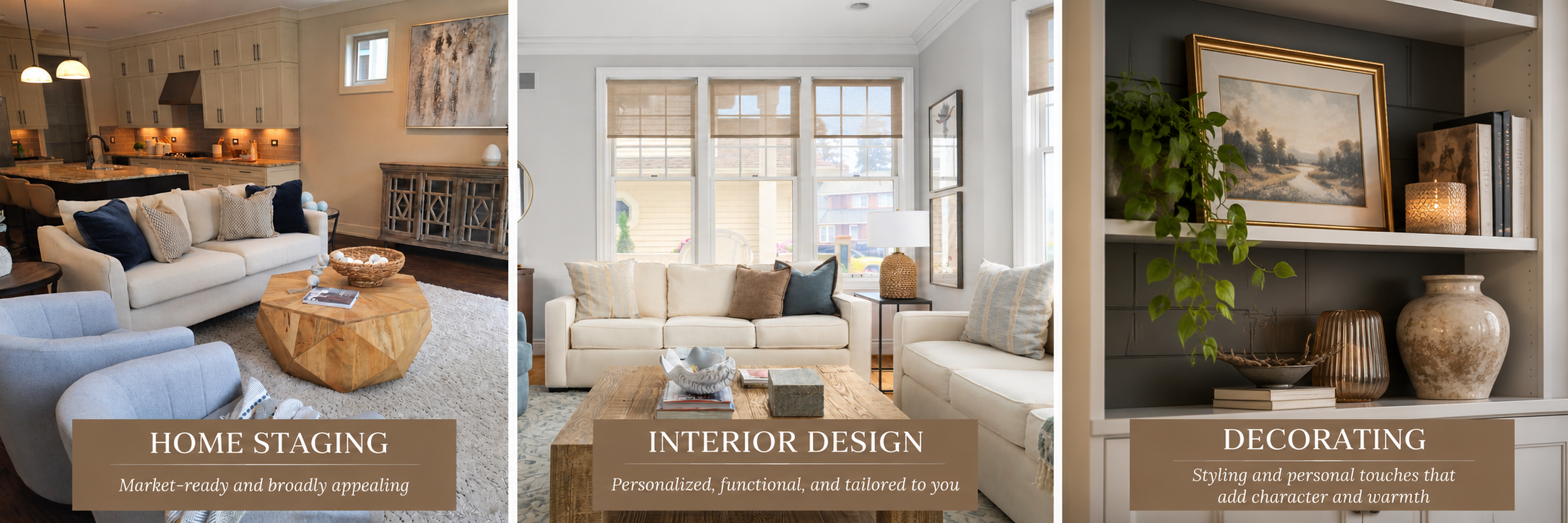
The biggest difference is who the space is being designed for. Decorating reflects the taste and personality of the people who live in the home. Interior design creates a space around the long-term needs, lifestyle, and preferences of a specific client. Home staging has a different objective: prepare the property to appeal to the largest possible pool of buyers.
For agents, that distinction matters. A beautifully decorated home is not necessarily a well-staged home, and a professionally designed space may still need editing before it goes on the market.
Home Staging Is Merchandising
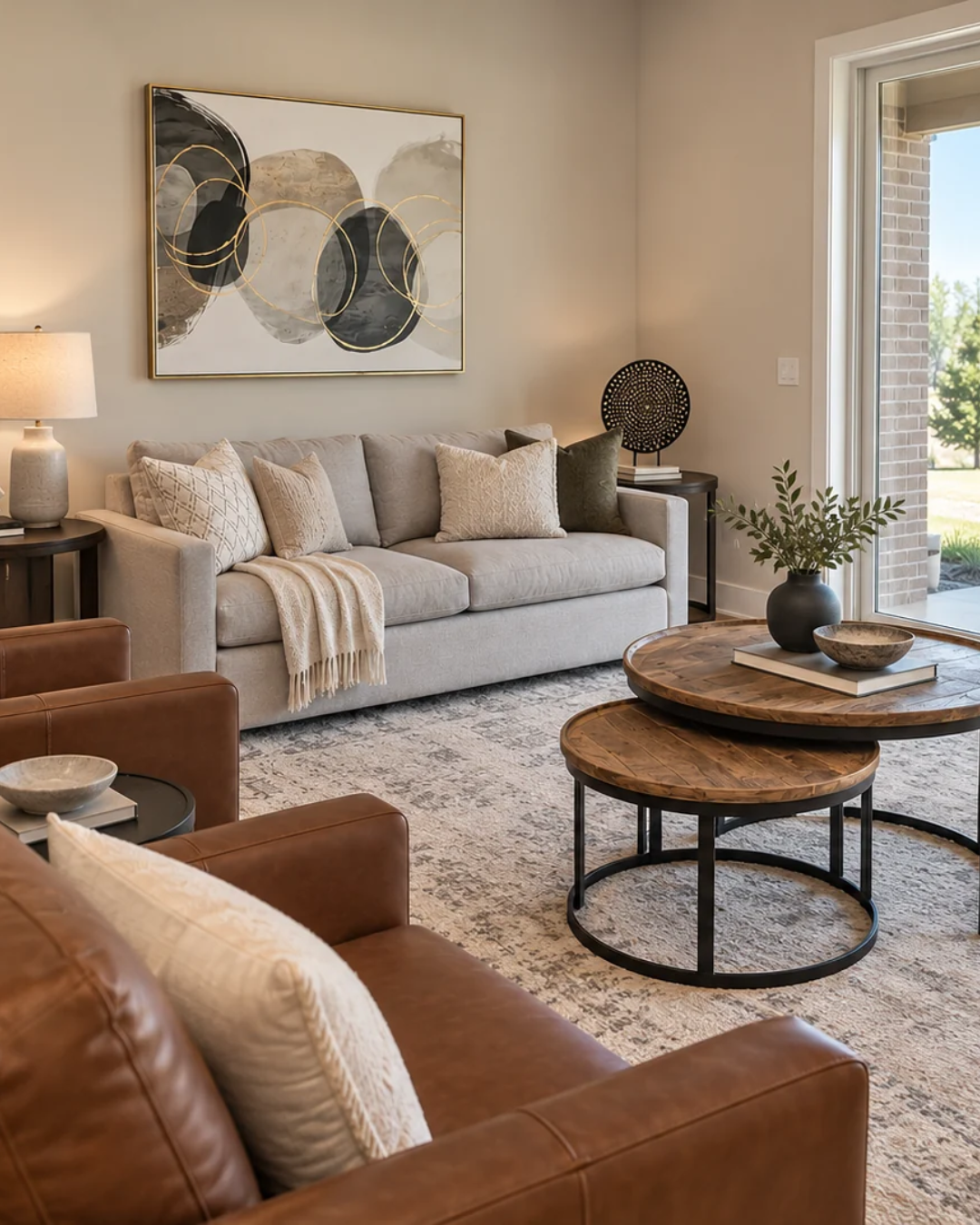
At its core, staging treats the home as a product being prepared for market. Furniture, accessories, lighting, and layout are used strategically within the home. They highlight the property’s strengths, improve flow, establish scale, and help buyers understand how the space can be used. Personal elements are reduced so buyers can more easily imagine the home as their own.
That buyer connection is important. According to the National Association of REALTORS® 2025 Profile of Home Staging, 83% of buyers’ agents said staging made it easier for buyers to visualize a property as their future home. Nearly half of sellers’ agents also reported that staging reduced time on market, while 29% reported a 1%–10% increase in the dollar value offered compared with similar unstaged homes.
Staging is not about imposing a particular design style. It is about presenting the property in a way that makes sense to buyers and keeps the focus on the home itself.
How Staging Differs from Decorating and Interior Design
Decorating is personal by nature. It reflects the people living in the home—their taste, collections, artwork, color preferences, and lifestyle. That personalization is exactly what makes a home feel like home, but when it is time to sell, too much of it can make it harder for buyers to picture themselves there.
Staging edits that personal story. Family photos may come down, collections are simplified, and furniture can be removed or repositioned. Accessories and artwork can also be adjusted to create a broader appeal. The goal is not to make the house generic; it is to make the property itself the focus.
Interior design is also highly personal, but on a larger scale. A designer creates spaces around the way a client wants to live, often addressing space planning, furniture, finishes, lighting, window treatments, and construction details. As our team at Interiors by Impact puts it, “We don’t design to showcase our style; we design to elevate yours.”
Staging turns that equation around. Instead of designing for one client, we are preparing a property for buyers we have not met yet. The question changes from “What does this homeowner love?” to “What will help buyers understand and connect with this home?”
Why Professional Staging Works
Buyers do not always see what agents, sellers, or designers see. An empty room may look smaller than it actually is because there is nothing to establish scale. A large open space may leave buyers unsure where living, dining, and entertaining areas belong. An unusual room may feel like wasted space until staging gives it a clear purpose.
Professional staging answers those questions visually. NAR’s 2025 research found that buyers’ agents considered the living room, primary bedroom and kitchen the most important rooms to stage, which also happen to be spaces that play a major role in listing photography and in the emotional connection buyers make during a showing.
In vacant homes, staging adds warmth, proportion, and context. In occupied homes, it may involve editing what is already there, improving flow and supplementing furnishings where needed. The goal is the same in either case: help buyers see the property clearly and at its best.
What Does the Listing Need
Not every listing requires the same approach. A vacant property may benefit from full staging in the rooms that matter most, while an occupied property may simply need a consultation or Market Ready Refresh to edit furnishings, improve layout, and prepare the home for photography and showings. Model homes require another approach entirely, combining aspiration with functionality to help buyers understand the lifestyle a builder or development is offering.
Professional staging is not an all-or-nothing proposition. The right plan depends on the property, the market, the price point, and what the listing needs in order to compete.
For agents, staging is ultimately part of the marketing strategy. It gives the photographer better material to work with, helps buyers understand the property online, and creates a more intentional experience when they walk through the door. Instead of asking buyers to overlook an empty room, an awkward layout, or a seller’s highly personal style, staging allows the home’s strongest features to do the selling.
For more than 20 years, Impact Home Staging Experts has worked with Southeast Michigan agents to prepare listings for market, from full vacant stages to occupied-home consultations and refreshes.
The objective has always been simple: present the property, not the personality of the person leaving it.
Need help deciding what level of staging makes sense for an upcoming listing? Contact Impact Home Staging Experts to create a plan that fits the property, timeline, and market.