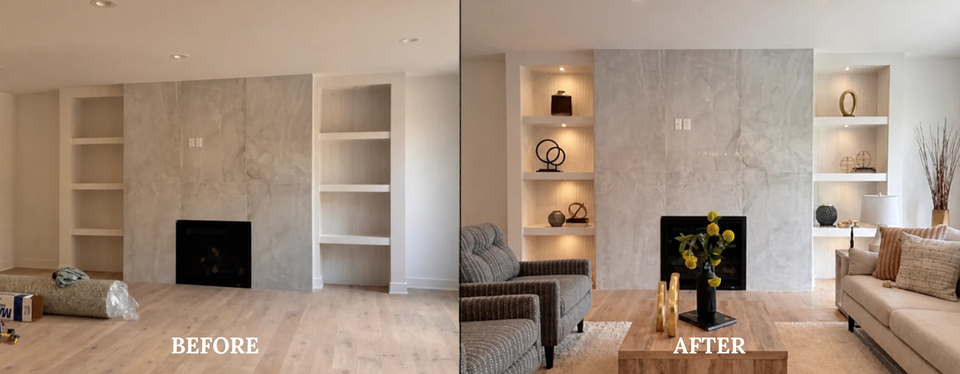
It seems logical: take the furniture out of a room, and it should look bigger.
In real estate, the opposite is often true.
Without furniture, buyers have very little context for judging scale. A vacant living room may look smaller than it really is. An empty primary bedroom can leave buyers wondering whether a king-size bed will fit. An open-concept space may make it difficult to understand where living, dining, and entertaining areas actually belong.
Professional staging helps solve that problem by giving buyers the visual reference points they need to understand the space.
Why Empty Rooms Feel Smaller
Most people are not particularly good at estimating the dimensions of an empty room. Furniture acts as a familiar measuring tool. A sofa helps establish the width of a living room. A bed and nightstands show how much usable space a bedroom really has. A dining table demonstrates how comfortably people can move around the room.
Without those reference points, buyers may underestimate the size of the space or begin wondering whether their own furniture will fit. Vacant rooms can also feel colder and less inviting. Hard surfaces create more echo, while the absence of textiles, lighting, and furnishings can make a property feel unfinished rather than move-in ready.
That can be especially important in listing photography, where buyers are trying to understand an entire room from a two-dimensional image on a screen.
How Staging Fixes the Problem
Staging doesn’t change the square footage. It changes how buyers perceive it.
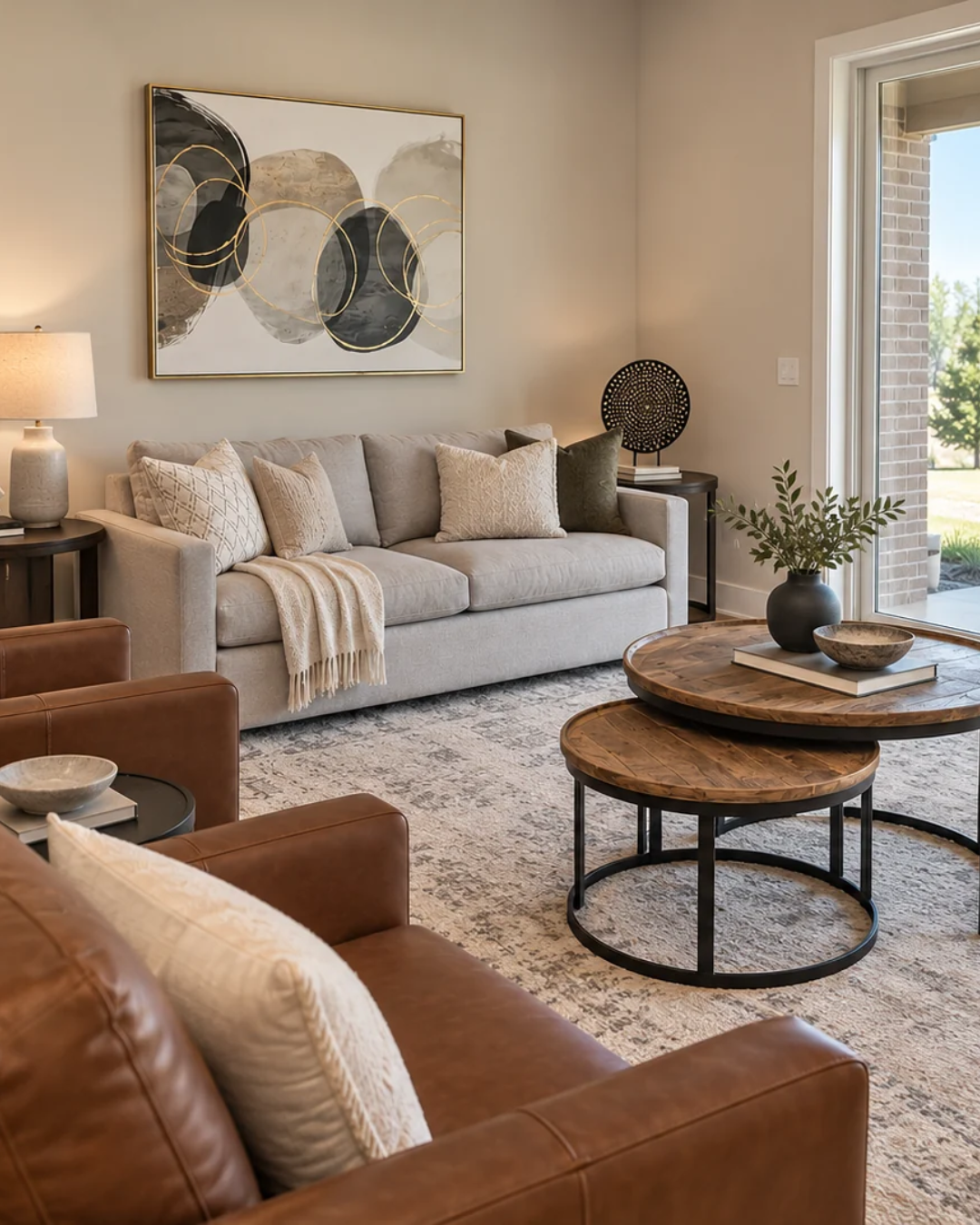
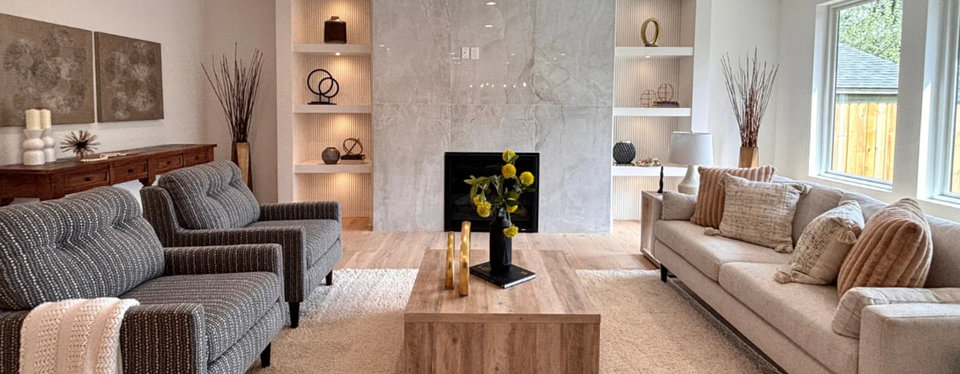
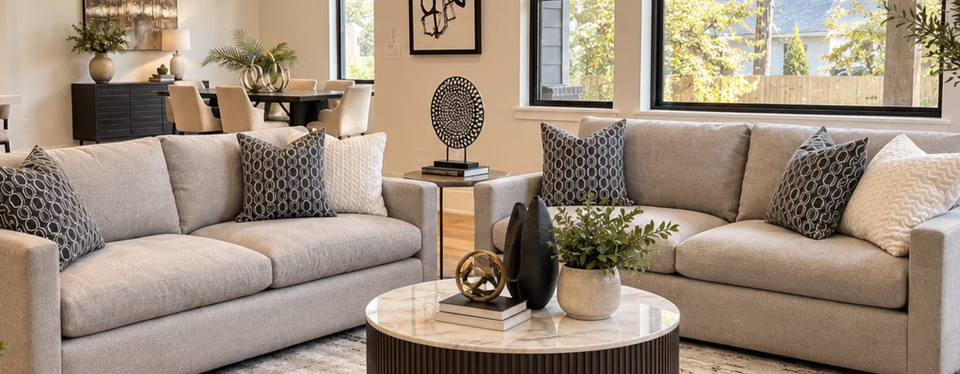
Properly scaled furniture establishes proportion and gives the eye something familiar to measure against. A well-sized sofa can actually make a living room feel more spacious because buyers immediately understand how much furniture the room can accommodate. A staged bedroom can demonstrate that there is space for a bed, nightstands and additional furniture without crowding the room.
Staging also helps define purpose. An empty room may leave buyers wondering whether it is a bedroom, office or something else entirely. An open-concept floor plan can make it difficult to see where one function ends and another begins. Furniture and area rugs create clear zones and show how the space can be used without adding walls.
For buyers, that means less guessing and a clearer picture of what the home offers.
Why It Matters for the Listing
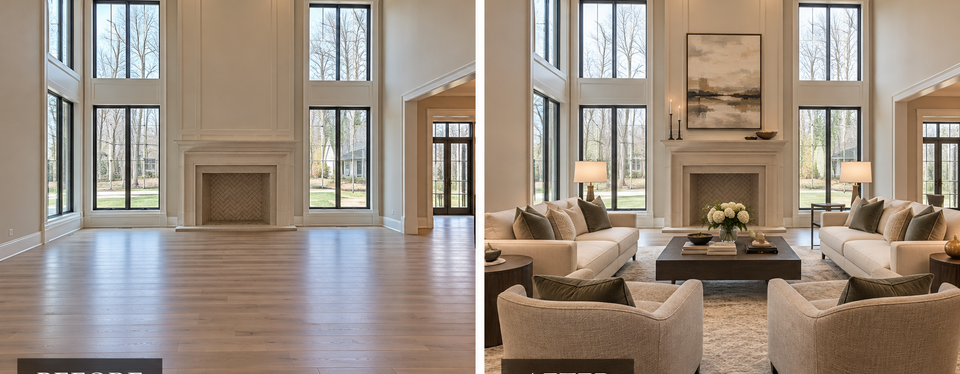
For most buyers, the first showing happens before they ever enter the house. Listing photos have to communicate scale, function and appeal quickly, and empty rooms often struggle to do that because there is very little visual information to work with.
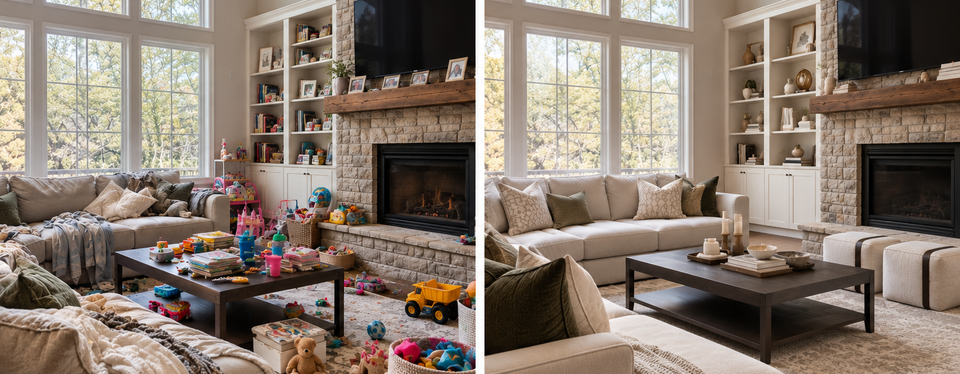
A staged room provides depth, proportion, and focal points, giving the photographer much more to work with. It also helps buyers understand what they are seeing as they scroll through a listing.
That matters because the National Association of REALTORS® 2025 Profile of Home Staging found that 83% of buyers’ agents said staging made it easier for buyers to visualize a property as their future home. Nearly half of sellers’ agents also reported that staging reduced time on market, while 29% reported a 1%–10% increase in the dollar value offered compared with similar unstaged homes.
For agents, staging a vacant property is not simply about making the listing look more attractive. It can help remove objections before they develop. Instead of asking buyers to imagine whether a sofa will fit, staging can show them. Instead of explaining where the dining area goes, staging can define it.
Where to Focus the Staging
Not every vacant room necessarily needs to be staged. The greatest impact usually comes from the spaces buyers care about most and the rooms where scale or function may be difficult to understand.
According to NAR, buyers’ agents identified the living room, primary bedroom and kitchen as the most important rooms to stage. Dining areas and other key living spaces may also benefit, particularly in homes with open or unusual floor plans.
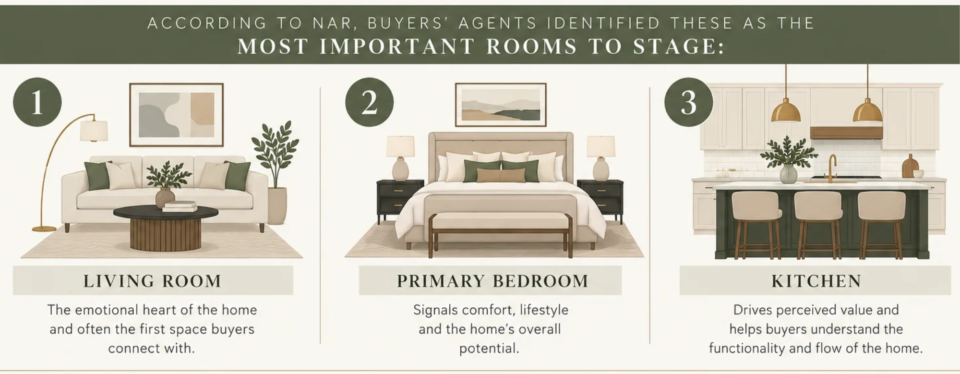
A strategic staging plan focuses the investment where it will do the most work.
Empty rooms don’t necessarily look larger. Without visual reference points, they can make it harder for buyers to judge size, understand function, and imagine how they would live in the space. Professional staging restores that context by establishing scale, defining purpose, improving photography, and helping buyers see the potential of the property more clearly.
For more than 20 years, Impact Home Staging Experts has helped Southeast Michigan agents prepare vacant and occupied listings for market. If an upcoming listing has rooms that buyers may have difficulty understanding, we can help determine where staging will have the greatest impact.
Ready to give your next listing the Impact Edge? Contact Impact Home Staging Experts for a staging consultation or quote.